
Firmware 5.0
for the Leica SL3 family
Jonathan Slack
November 27th 2026
Death Cap - Amanite phalloides (I think!)
Leica SL3 with the APO MACRO ELMARIT F2.8/100mm
Introduction
I don’t usually write about firmware updates, but in this case it seems to be such a major update that I thought it was worth a proper mention. The new firmware for the Q3 and SL3 cameras are both released on November 27th 2026.
There are various new features, some of which are available on both Q3 and SL3 and some which are exclusive to one or the other.
I’m going to have a quick look at the highlights, first the new features and then the improvements to existing features - this time I’ll look at the SL3 updates, I’ll do a another article about the Q3 updates a bit later.
Afterwards I’ll have a proper look at my favourite new features and discuss the implications of the changes.

Stinking Iris (Iris foetidissima)
Leica SL3 with the APO MACRO ELMARIT F2.8/100mm
New Features for Firmware version 5
Focus Bracketing (both SL3 and Q3 variants)
This is a new setting in the Drive Mode menu, it allows you to choose the number of images, the increment of focus change, and whether it works from the closest focus point backwards - or both backwards and towards the camera.
This is a really welcome new feature, I’ve spent a lot of time testing it; it works really well and I’ll go into it’s use in more detail later on in the article.
ochs und junior moonphase
Leica SL3 with the APO MACRO ELMARIT F2.8/100mm
Pre-Shot Mode (SL3 family)
This is another fantastic new feature, long overdue, but really well implemented. This means you can half press the shutter and the camera will start taking images and store them in the buffer - you can elect the frames per second rate, and also the length of the buffer.
When you fully press the shutter the camera will save the images in the buffer and carry on taking images until you either take your finger off the shutter, or the buffer is full.

Jumpy Jump
Leica SL3 with the APO MACRO ELMARIT F2.8/100mm
Shutter Setting when switching off (SL3-P only)
You can choose to have the shutter close when the camera is switched off - helping to exclude dust and moisture from the sensor.
Improved support for creating videos from an image series
Compatible L-Mount lenses with function buttons can now have the custom function assigned via the camera. (I’m not sure which 3rd party lenses this will include - none of the Leica lenses have function buttons). I guess it’s a case of trying. You can choose to have the shutter close when the camera is switched off - helping to exclude dust and moisture from the sensor.
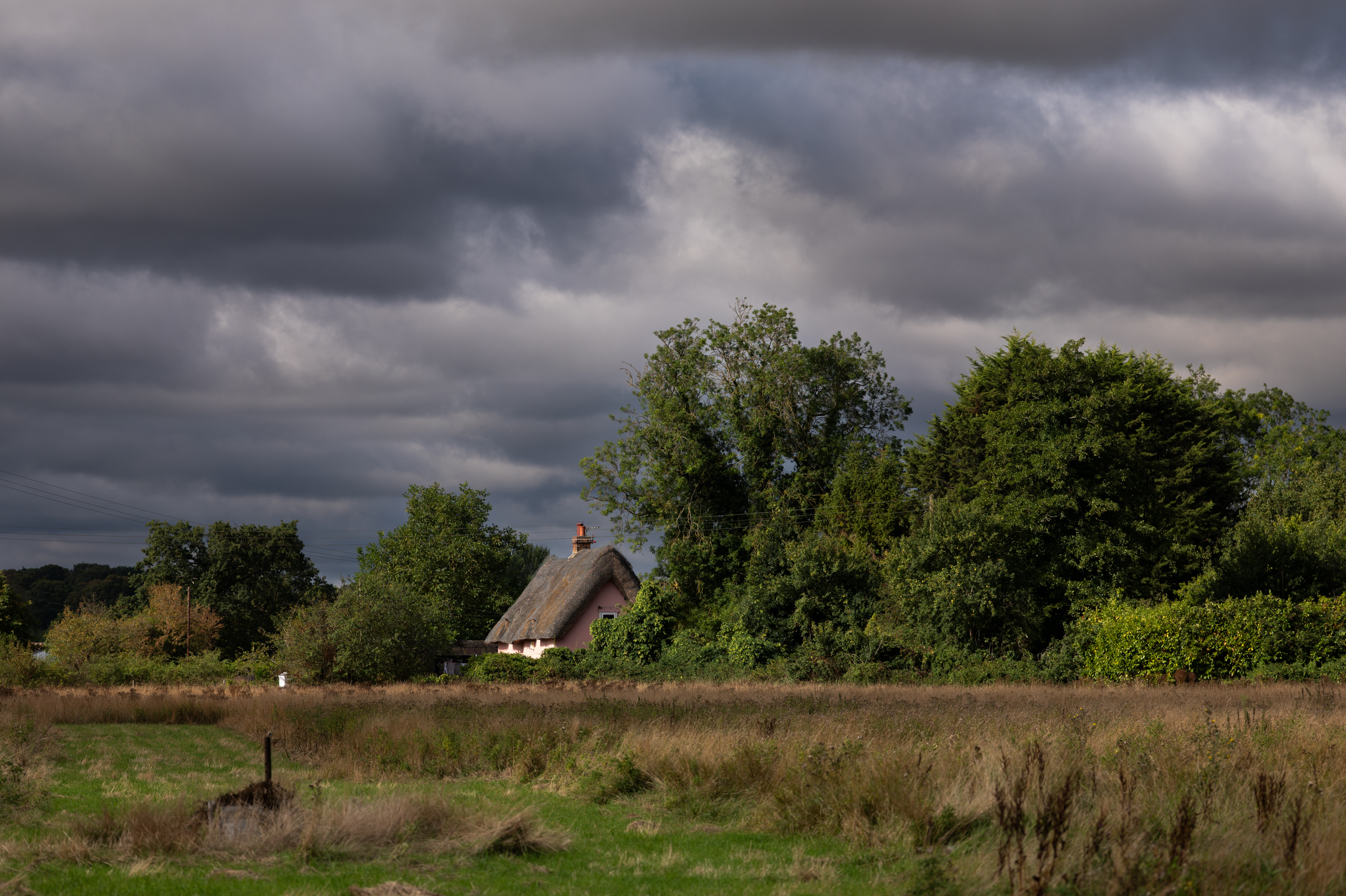
Thatched cottage
Leica SL3 with the Summilux SL 1:1.4/50 ASPH (new version)
Improvements (highlights)
Improved rendering of Live View magnification (SL3-P & SL3-S)
This only relates to the SL3-S and SL3-P and it only relates to the central area of the EVF display, but there is a significant improvement of the quality, making focusing easier.
Visual stability display for handheld Multi-Shot
This shows camera movement and helps with holding the camera as steady as possible
Support for SIGMA SPORTS 300-600 f4 DG OS
The “Focus Recall” and “Power Focus” functions are supported. This is probably Sigma’s flagship nature and wildlife lenses, so it’s great that Leica are taking it seriously.
Improved support for creating videos from an image series
The “Create Video” option is now directly accessible via the Overlay menu in Review mode. Making ‘stop motion’ videos from a range of shots is a fun option (it was so well hidden I didn’t realise it existed before!
There are plenty more improvements and bug fixes which are documented on Leica’s release notes for the firmware upgrade which you can see
here:
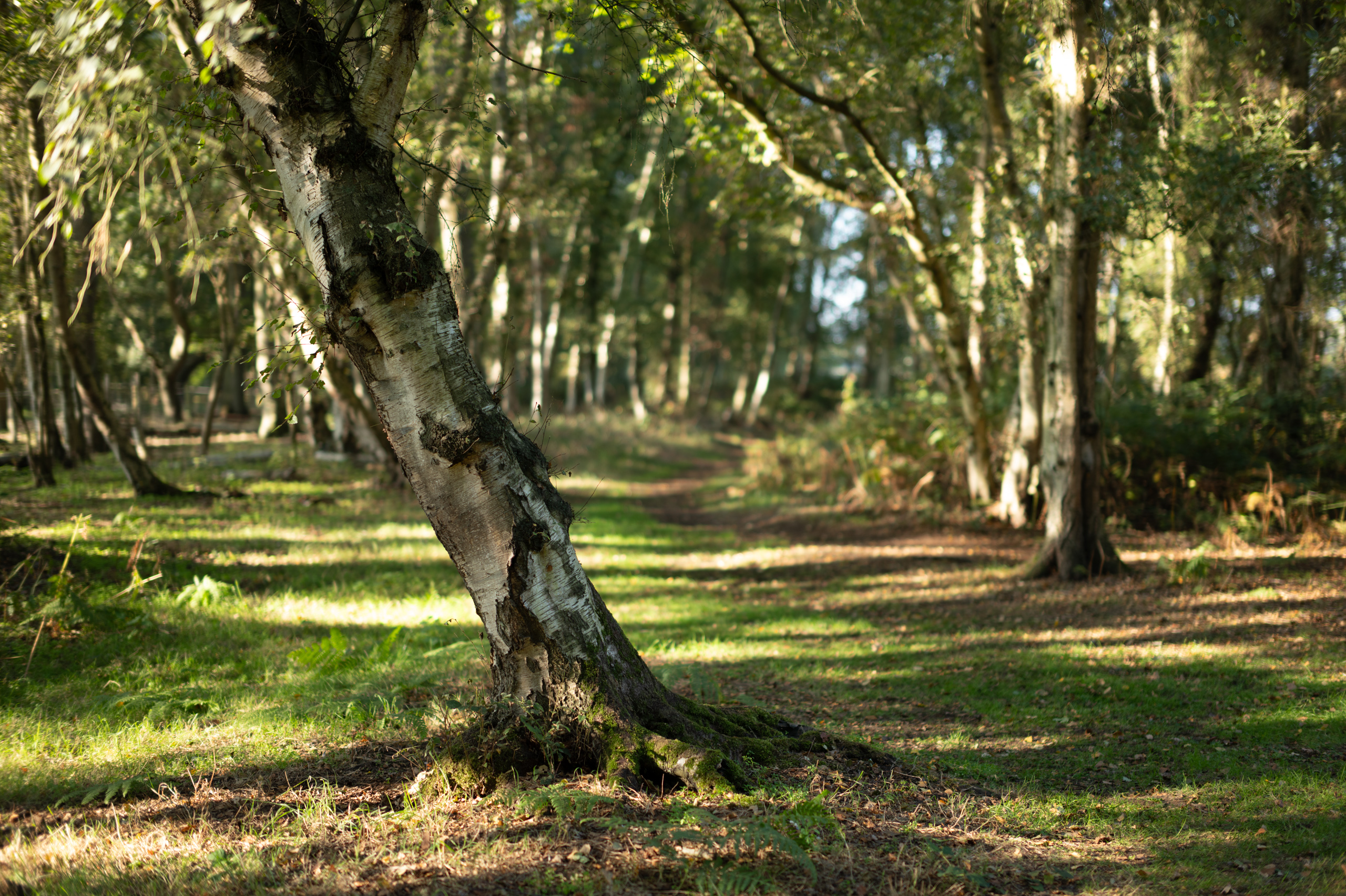
Silver Birch woodland
Leica SL3 with the Summilux SL 1:1.4/50 ASPH (new version)
Pre-Shot mode
First of all Pre-Shot - for situations when you are waiting for something to happen perhaps a bird taking off, a squirrel about to leap, my dog waiting to pounce on an unsuspecting mole hill, and almost any any fast moving sporting situation.
Before this update it was so easy to wait patiently for the action . . . and then, when it happened pressing the shutter 1/2 second too late!
Now you can half press the shutter and the camera will keep taking pictures and storing them in the buffer until you finally press the shutter, at which point the images still in the buffer will be saved, and while you keep your finger on the shutter it will keep taking pictures until the buffer is full.
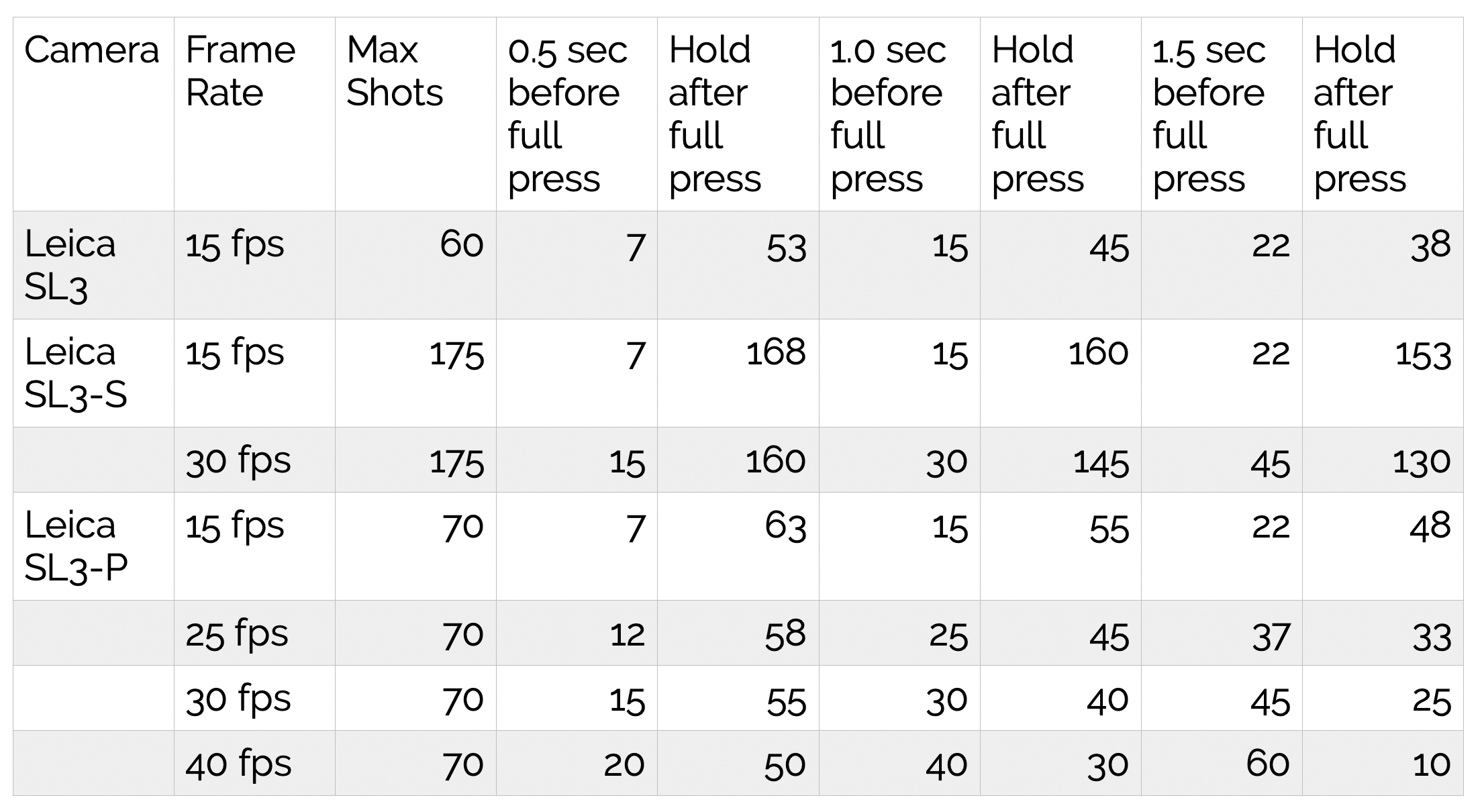
I’ve only been using this with the SL3 (I no longer have my test SL3-P) with the SL3 only works at the 15 fps, with the SL3-S it is at 14 and 30 fps, and with the SL3-P it is 15, 24, 30 and 40 fps
You can choose to save images from 0.5 seconds before the full press, 1 second or 1.5 seconds before the full press. The camera buffer and file size has an effect which is shown in this table:
Focus Bracketing
I’ll go into this in more detail in my article on the 100mm Macro Elmarit, which I will be publishing in the next couple of days. This is a wonderful new feature which is fantastic when using macro lenses, but which can be used for anything where you want to increase the depth of field for a particular section of an image.
For instance - if you were taking a product shot of a camera on a table and you wanted all the camera to be in focus, but the background to remain out of focus. If you take a single shot, then you have the choice of a wide aperture, which will mean that only part of the camera is in focus, alternatively if you stop down enough for all the camera to be in focus, then the background will no longer be blurred.
Using Focus Bracketing you can shoot wide open, focusing on the nearest point on the camera. Then set the camera to bracket focus in the drive mode section. You might take 25 images where the point of focus goes from the front of the camera to the back, when these images are stacked together the camera will be in focus, but the background will not.
You can choose whether the camera takes images behind the first shot (usually best) or else both in front and behind (great for some situations - paintings for example).
Leica have produced some excellent instructions at the end of their Release Notes, which you can download
here.

The Red Jug - focus stacking 50 images at f2.8
Leica SL3 with the APO MACRO ELMARIT F2.8/100mm
Focus Stacking Software
The camera will provide a set of images with slightly different points of focus. Some cameras will do the stacking ‘in camera’ but the truth is that doing it properly is seriously processor hungry.
I’ve spent quite a lot of time trying different methods of stacking the images. From Lightroom Classic you can pick the images and then edit in Photoshop as layers - this is okay, but it is very slow (especially if you use lots of images) and the image returned to Lightroom is an extremely large tiff file.
Talking to other photographers it seems that the best option is a program called
Helicon Focus - you can pay an annual fee of about £40 or a lifetime license for £150 (which I did). If you are using a Mac with Apple Silicon be sure to use version 9 - it’s incredibly fast and produces wonderful images which can be saved back to Lightroom as DNG files (for further editing).

Amanita muscaria - the Fly Agaric
Leica Q3 43 in macro mode - 25 images stacked
Significance - Sport, Wildlife and Nature
Back in the day, the Leica R cameras with the Leica telephoto and macro lenses were very much favoured for shooting wildlife and nature; manual focus was not such a handicap in the early days of autofocus, and the quality of the glass was often a deciding factor.
I’ve been using my SL3 for this purpose since I got it, but still it was missing a couple of fundamentals which the opposition had mastered.
These two features really seem to have closed the gap. Pre-Shot mode is a must for any sports or nature photographer and Focus bracketing is wonderful for macro, product and even landscape photography

More Stinking Iris
Leica SL3 with the APO MACRO ELMARIT F2.8/100mm - 55 images stacked in Helicon Focus
Conclusion
This is a fantastic firmware upgrade, it’s proof that Leica are really listening to what customers need, and with the SL3-P and firmware v5 they have really brought the SL3 family right up to date.
Look out for my article on the Leica APO-MACRO-ELMARIT-SL 1:2.8 100 which will be published in the next day or so.
The End!
Jonathan Slack has been testing cameras for Leica since 2009, he has also been writing about them, and all the old articles can still be found on this website (maybe an index is coming!).
Jonathan Slack's duty of care is to Leica, and whilst he would never omit something he considered important, nor say anything he didn't consider to be true, it is worth remembering this when reading these articles.
There are no adverts, no click bait and nobody (Leica or anyone else) pays for these articles to be written. This is in an attempt to remain objective and not to be distracted by the hunt for clicks.
Jonathan Slack is also a member of the board of LSI (Leica Society International).
Click on the Leica Society logo below to look at the Leica Society International website where you can find a huge resource of Leica material and join the society to learn more about Leica and photography and to meet up with like minded people.

